

The memorandum of understanding signed in Istanbul between Türkiye and the United Kingdom brings Türkiye one step closer to officially joining the ranks of Eurofighter Typhoon operators. The document, signed by UK Defence Secretary John Healey and Turkish National Defence Minister Yaşar Güler, is seen as a significant step toward strengthening NATO cooperation.
The German government has also approved the sale of 40 Eurofighter Typhoon jets to Türkiye. Valued at approximately €4.75 billion, the deal is expected to play a critical role in modernizing the Turkish Air Force.

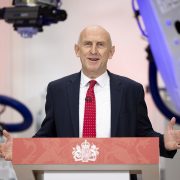
UK Defence Secretary John Healey and Turkish National Defence Minister Yaşar Güler
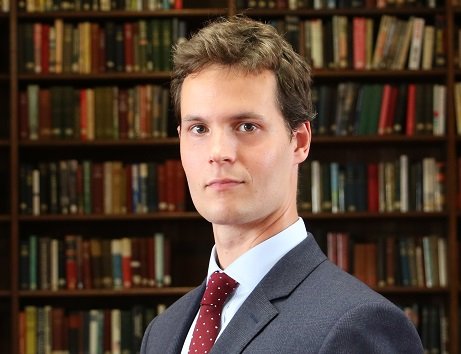
Speaking to BYTV, Professor Justin Bronk, Senior Research Fellow for Airpower and Technology at the Royal United Services Institute (RUSI), said the Eurofighter move would keep the Turkish Air Force competitive until at least 2035.

Political Signal as Well as Military Upgrade
According to Prof. Bronk, the Eurofighter sale carries not only military but also political significance, as it involves sharing sensitive technologies and reflects renewed trust between Türkiye and NATO.
“The Eurofighter Typhoon sale to Türkiye is not just a military step; it sends a political message. The Typhoon contains advanced technology, and sharing it demonstrates NATO’s confidence in Türkiye. Following Ankara’s expulsion from the F-35 program, the Typhoon offers a way to compensate for the strategic airpower advantage Türkiye lost,” Bronk said.
Limited Impact on Regional Balance – But a Strategic Move
Bronk believes the Eurofighter will not drastically change the regional balance of power in the short term, as it will take time for the Turkish Air Force to integrate the new aircraft and fully train its pilots.
“The first few years won’t change the balance, because it takes time for the Turkish Air Force to fully operate these jets. However, this step will prevent Türkiye from falling behind regional air forces like those of Greece, Israel, and Russia. Replacing the aging F-4 Phantom fleet and modernizing F-16s will give Türkiye strong operational capacity for at least 10–15 years,” he noted.
Türkiye is set to finalize a deal for 40+ Eurofighter Typhoon jets this week during IDEF 2025. pic.twitter.com/wGvvv1GA6g
— PAF Falcons (@PAFFalconsPK) July 22, 2025
Greek and Israeli Objections Unlikely to Succeed
Despite unease in Athens and Tel Aviv, Prof. Bronk argues that Greek and Israeli objections will have little impact.
“Neither Greece nor Israel is a core partner in the Eurofighter program, and they do not operate the aircraft. It’s also hard to credibly claim that the Typhoon will dramatically alter regional power balances, so these objections are unlikely to influence the main Eurofighter nations,” he explained.
Compatible with F-16s and TF-X KAAN
Bronk underlined that the Eurofighter Typhoon will be highly compatible with Türkiye’s existing F-16 fleet and the domestically developed TF-X (KAAN) fighter program.
“The Typhoon, being NATO-standard, will integrate easily with the F-16 fleet through systems like Link 16 and shared munitions such as AIM-120 AMRAAM. For the TF-X, existing partnerships between Turkish Aerospace Industries and UK companies like Rolls-Royce and BAE Systems will facilitate future interoperability,” he said.
Maintenance Role Likely, Manufacturing Role Unlikely
Bronk believes Türkiye could realistically take part in maintenance processes but is unlikely to be included in the production chain.
“Türkiye could definitely participate in maintenance and even establish a maintenance hub domestically. However, joining the production chain is unlikely due to cost and timing. The Eurofighter already has a mature and efficient manufacturing network in the UK, Germany, Italy, and Spain. Adding Türkiye would increase costs and delay production by at least five years,” he stated.
About Professor Justin Bronk
Prof. Justin Bronk is a Senior Research Fellow at RUSI and Editor of RUSI Defence Systems. His expertise includes modern combat aircraft, Russian and Chinese air defence systems, and emerging weapons technologies. He also serves as Professor II at the Royal Norwegian Air Force Academy.
A licensed pilot with over 300 flight hours in light aircraft and gliders, Bronk has flown backseat on various fast jets, including the Eurofighter Typhoon, Rafale, Gripen, Tornado ECR, F-16, F-15D, and CF-18.

 By
By 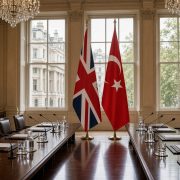










Comments